Why a Good Beer Starts with a Good Crush
Malt milling is the very first physical step in beer brewing—yet it’s often overlooked. How you crush your malt directly influences mash efficiency, lautering performance, wort clarity, and even the final flavor profile of your beer. Understanding the technical principles behind malt milling empowers brewers to achieve consistent, efficient, and high-quality results, batch after batch.
What Is Malt Milling?
Malt milling is the controlled mechanical process of breaking open malted barley grains to expose the starchy endosperm while preserving the integrity of the husk as much as possible.
Crucially, the goal is not to turn malt into flour. Instead, it’s to create an optimal particle size distribution: coarse enough to support smooth wort separation, yet fine enough to maximize enzymatic access to starch during mashing.
Why Malt Milling Matters—Technically
A well-executed malt crush impacts several critical stages of the brewing process:
- Mash efficiency: Properly exposed endosperm gives enzymes better access to starch, improving extract yield.
- Lautering performance: Intact husks form a natural filter bed in the lauter tun, enabling steady runoff.
- Wort clarity: Excessive fine particles (flour) increase turbidity and can carry over into the boil kettle.
- Process repeatability: Consistent milling leads to predictable brewhouse performance and stable recipes.
Conversely, poor milling can cause low extract yields, stuck sparges, slow runoff, or inconsistent batches—often mistaken for issues with mash chemistry or equipment design when the root cause lies upstream.
The Core Technical Principle: Balancing Two Opposing Goals
At its heart, malt milling is a balancing act between two competing objectives:
- Breaking the starchy endosperm into coarse grits
→ Increases surface area for enzymatic conversion during mashing. - Preserving the husk structure
→ Husks act as a natural filtration medium during lautering and should remain largely whole or only lightly cracked.
The ideal crush therefore features:
- Coarse, granular endosperm particles
- Minimal flour (<10% by weight is a common industry benchmark)
- Mostly intact husks that are cracked but not shredded
This balance is best achieved through controlled compression—typically using roller mills—rather than high-speed impact grinding, which pulverizes both husk and endosperm indiscriminately.
Key Milling Parameters Brewers Must Control
1. Roller Gap Setting
The single most critical adjustment on most mills.
- Typical dry-milling gap: 0.8–1.2 mm for standard base malts (e.g., Pilsner, Pale Ale)
- Narrower gap (e.g., 0.7 mm): Higher extract potential but increases risk of stuck lautering due to excess fines
- Wider gap (e.g., 1.3 mm): Improves runoff and husk integrity but may reduce efficiency by 3–5%
💡 Note: Optimal gap depends on malt type, moisture content, and whether you’re dry- or wet-milling.
2. Mill Design
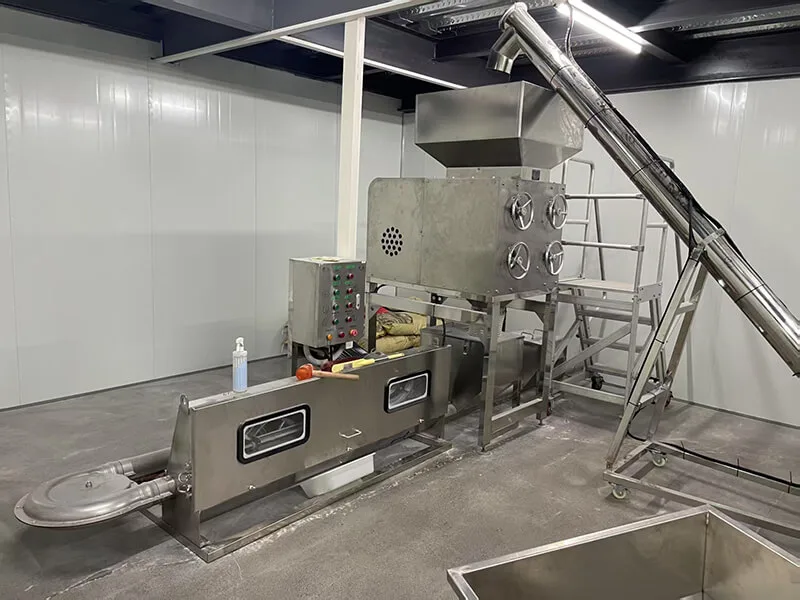
- Two-roller mills: Simple, affordable, and effective for most craft breweries. Require careful calibration.
- Four-roller mills: Use a two-stage process—first cracking the grain with a wide gap, then re-milling the endosperm with a tighter gap. This decouples husk handling from starch exposure, yielding better husk preservation and more uniform particle size. Common in larger brewhouses.
3. Milling Speed
High RPMs generate heat and increase flour production through secondary crushing. For consistent results, moderate speeds (e.g., 100–300 RPM) are preferred—especially on direct-drive systems.
Common Milling Problems & Their Technical Roots
| Problem | Likely Technical Cause |
|---|---|
| Low extract yield | Under-crushed malt; endosperm not sufficiently exposed |
| Stuck mash/sparge | Too many fines + damaged husks → compacted filter bed |
| Cloudy wort | Excessive flour carried into mash/lauter |
| Inconsistent batches | Worn rollers, unstable gap setting, or variable feed rate |
Most of these stem from milling setup, not mash tun design—making mill maintenance and calibration a high-return investment.
How Milling Affects Brewhouse Design & Operation
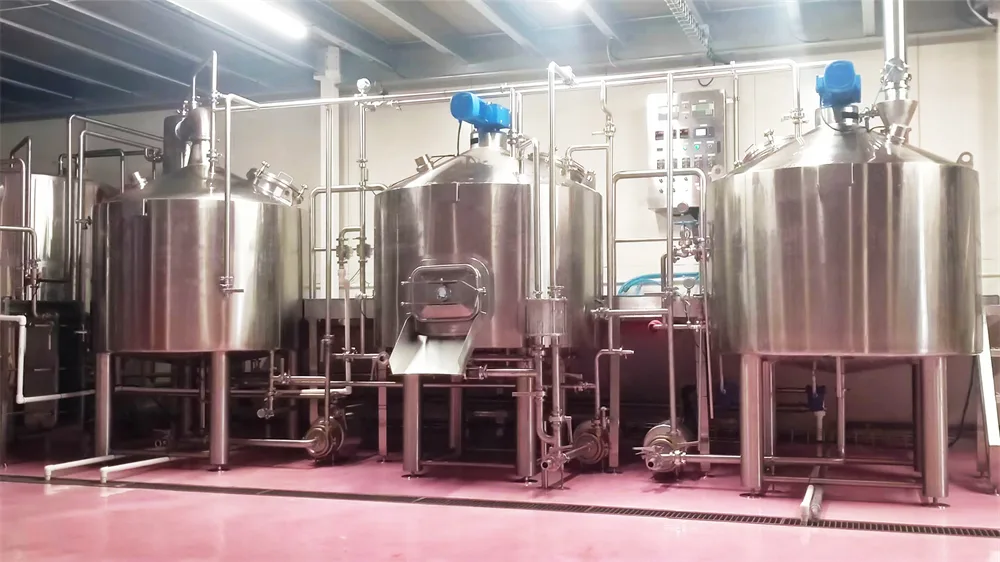
Malt milling doesn’t exist in isolation—it must align with your entire brewhouse system:
- Lauter tuns rely on intact husks to maintain permeability and flow rates.
- Mash mixers/agitators perform best with a balanced grist; too many fines cause compaction.
- CIP systems run more efficiently when flour buildup is minimized in vessels and lines.
For microbreweries, investing in a well-matched, properly maintained mill pays dividends in operational smoothness and reduced downtime.
🌾 Pro Tip: Consider wet milling—lightly moistening malt just before crushing—if you frequently experience lautering issues. The added moisture softens husks, reducing breakage while still allowing endosperm fracture.
Conclusion: Consistency Begins Between the Rollers
製麦は単なる "前処理 "ではない。デンプンの変換から麦汁の回収まで、醸造サイクル全体を形作る基礎的な技術プロセスなのだ。制御された粉砕の原理をマスターすることで、醸造家は効率性、透明性、再現性においてより優れた指揮をとることができる。
In professional brewing, consistency doesn’t start in the kettle or the fermenter.
It starts with a good crush.
醸造に関するご質問は、下記までお気軽にどうぞ。 お問い合わせ メト装備。