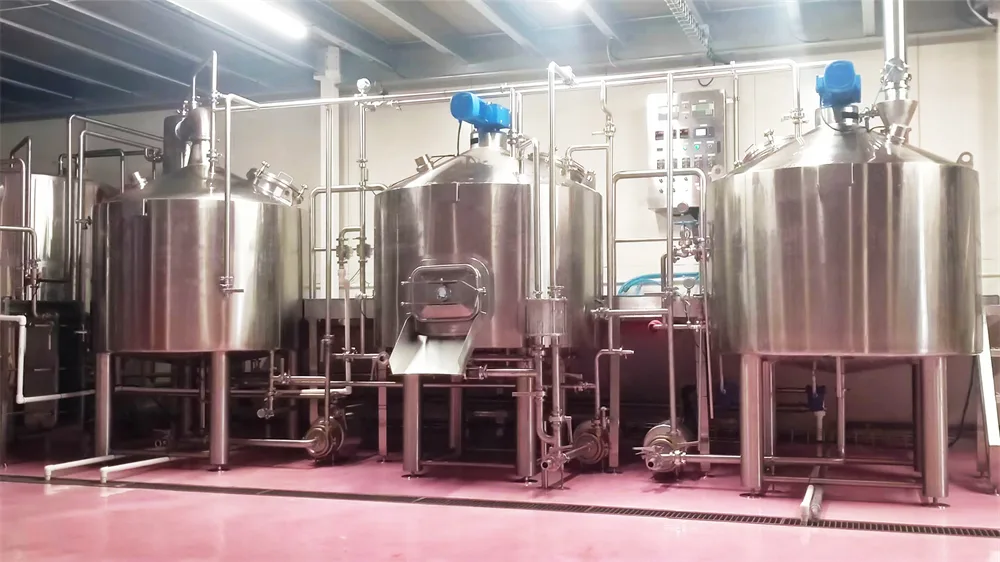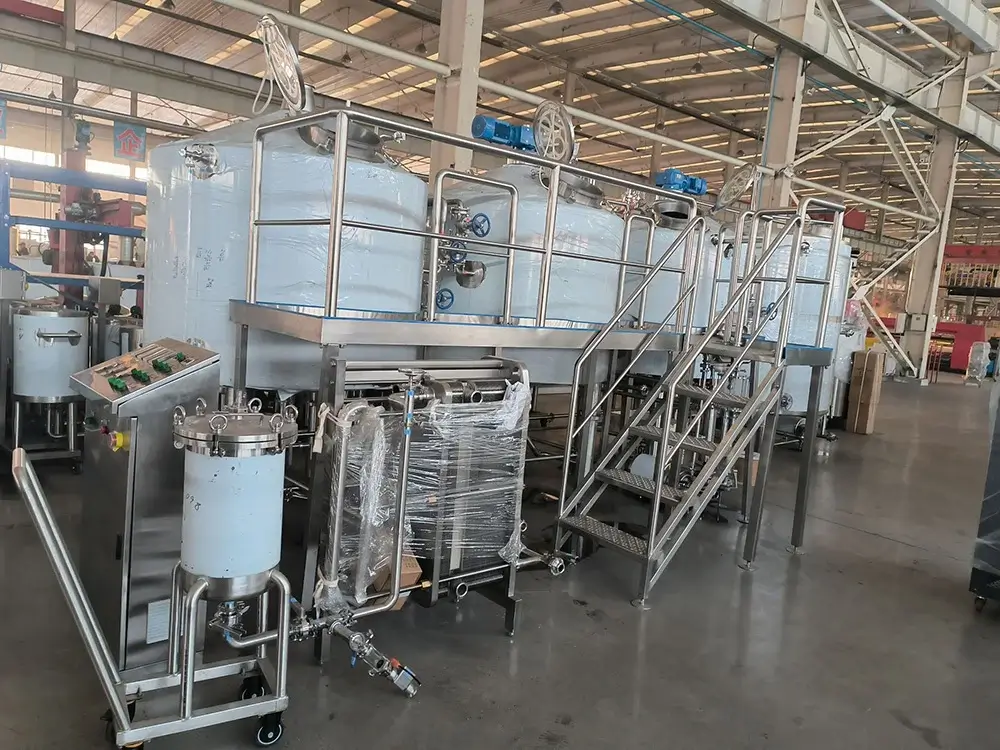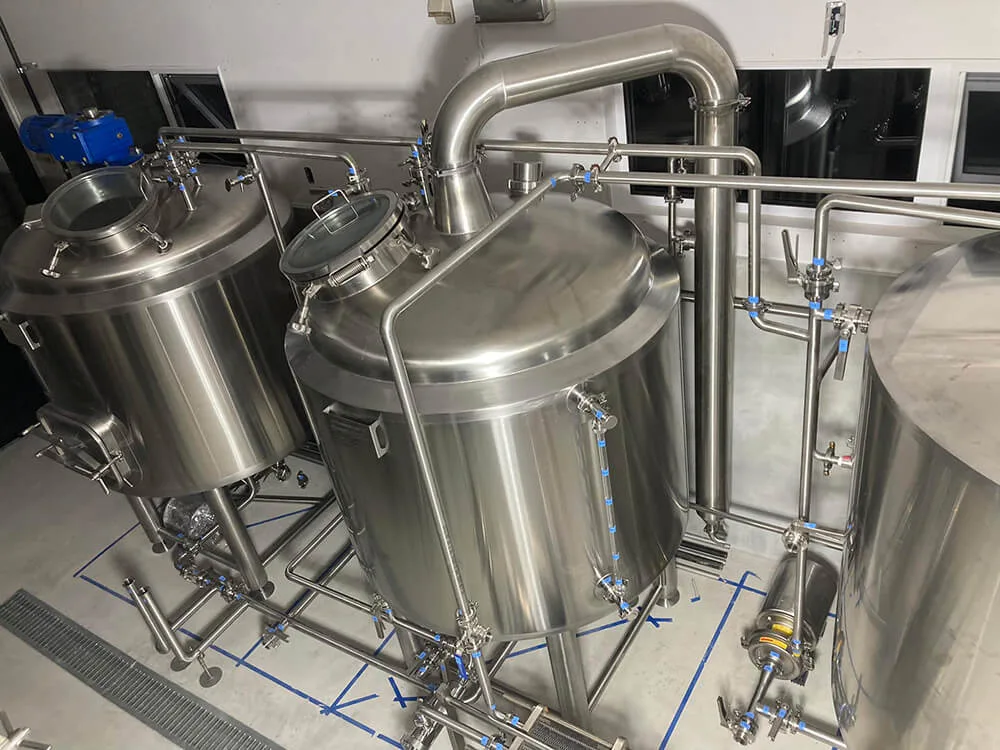
In the world of craft beer, every drop reflects a relentless pursuit of detail. From ingredient selection to fermentation, each step embodies the brewer’s skill and dedication. Among these intricate processes lies one seemingly simple—but critically important—step: milling. Today, we’ll explore how your choice of milling equipment directly affects production efficiency, cost, and ultimately, the quality of your beer.
Why Milling Matters
Milling isn’t just about “crushing” malt. Its true goal is achieving a precise structural balance:
“Break the husk—but don’t crush it. Grind the endosperm—fine and even.”
This precision directly influences:
- Mash efficiency (how well sugars are extracted)
- Wort clarity
- Lautering (filtration) speed
- The flavor purity and stability of the final beer
In short: Great beer starts with great grist.
- Husks must stay largely intact to form a natural filter bed during lautering, trapping fine particles.
- Endosperm (the starchy core) needs to be finely ground to maximize sugar extraction and fermentability.
Common Milling Methods & Their Best Uses
Most breweries—craft or industrial—use one of three milling techniques:
- Dry Milling
- Most common in small-to-medium craft breweries.
- Simple, low-maintenance, easy to clean.
- Dry malt passes through adjustable rollers that crush it mechanically.
- Conditioned (or Moisture-Enhanced) Milling
- A light mist of warm water is sprayed onto malt just before milling.
- Result: Husks become pliable and resist shattering, while the dry endosperm still mills finely.
- Benefit: Better filter bed formation + high extract yield.
- Wet Milling
- Used mainly by large-scale breweries demanding maximum efficiency.
- Malt is mixed with hot water during milling, creating a slurry fed directly into the mash tun.
- Advantage: Excellent extraction and faster processing—but requires complex integration.
How Milling Equipment Affects Efficiency & Cost
- Throughput capacity sets your production pace.
- A small 2-roll mill works for pilot batches but becomes a bottleneck at scale.
- 4-roll or 6-roll continuous systems handle high volumes smoothly, keeping your entire line moving.
- Filtration performance hinges on grind quality.
- Example: One brewery switched to a conditioned 4-roll mill and cut lautering time from 90 to 60 minutes—boosting daily batch capacity by 30%.
- Automation = consistency + lower labor costs.
- Advanced mills reduce manual adjustments, ensuring batch-to-batch uniformity.
- Though premium mills cost more upfront, they pay off through higher extract yields, fewer off-flavors, and less waste.
The Ripple Effect: How Milling Impacts Downstream Steps
1. Mash Efficiency
- Finer endosperm = more surface area for amylase enzymes → faster, more complete starch conversion.
- Coarse grist creates uneven temperature zones (“hot” or “cold” spots), risking incomplete conversion and excess dextrins.
- Over-crushed husks release alkaline compounds (polyphenols, silicates), raising mash pH beyond the ideal 5.2–5.6 range and inhibiting enzyme activity.
2. Lautering Performance
- Intact husks create a porous, stable filter bed. Crushed husks clog pores, causing channeling or “blind filters.”
- A good bed allows sparge water to flow evenly, maximizing sugar recovery. Poor beds require more sparge water—diluting wort and increasing energy use.
- Poor milling increases protein-polyphenol complexes in wort, raising risk of chill haze and reducing shelf life.
3. Flavor & Stability
- Excess husk breakage → more tannins leach out during hot sparging (>78°C) → harsh, astringent flavors and colloidal haze.
- Mechanical damage can rupture cell membranes, releasing lipoxygenase (LOX), which oxidizes fatty acids into aldehydes (e.g., trans-2-nonenal)—causing “cardboard” stale notes.
Milling Tech: Innovations & Trends
1. Advanced Roller Design
- 4-roll mills: First set cracks husks; second set grinds endosperm—ideal for balance.
- 6-roll mills: Further separate husk, germ, and endosperm—perfect for specialty malts or high adjunct recipes.
- Surface treatments: Laser-etched or ceramic-coated rollers reduce sticking and wear, extending lifespan.
2. Smart Control Systems
- Real-time particle analysis: NIR sensors or cameras monitor grind size and auto-adjust roller gaps.
- Batch traceability: Logs milling parameters (gap, speed, moisture) and links them to final beer quality—enabling data-driven optimization.
3. Sustainability Focus
- Dust/fines recovery: Collect fine particles from dry milling and add them back to the mash—boosting yield and reducing waste.
- Energy efficiency: Variable-frequency drives and optimized gearing cut power use per kg of malt.
最終的な感想
Though often overlooked, milling quietly lays the physical and chemical foundation for every batch of beer. Choosing the right method—and controlling it precisely—isn’t just about processing grain; it’s about honoring your ingredients and delivering consistent, clean, flavorful beer.
As the saying goes:
“Grind well, brew well.”
Whether you’re a homebrewer scaling up or a growing craft brewery optimizing your line, investing in smart milling practices will elevate your beer—and your bottom line.
We hope this guide helps you make informed decisions as you select or upgrade your milling system. Here’s to better grist, better beer, and better brewing! 🍻