A Technical Guide for 2-Vessel, 3-Vessel, and 4-Vessel Brewhouses
Selecting the right brewhouse system is one of the most important technical decisions when designing or upgrading a brewery. The number of vessels in a brewhouse directly affects process control, production efficiency, scalability, and long-term operational stability.
This article explains how to choose the right brewhouse system from a technical perspective, focusing on 2-vessel, 3-vessel, and 4-vessel brewhouse configurations, and how each aligns with different brewing goals.
1. Start with Your Production Goals, Not Equipment Size
A common mistake is choosing a mash system based solely on brewhouse size (e.g. 500L, 1000L, 10BBL).
In reality, vessel configuration matters as much as capacity.
Key questions to ask first:
- How many brews per day are required?
- Is production focused on consistency or flexibility?
- Are you planning future expansion within the same brewhouse?
If throughput and repeatability are critical, system configuration becomes more important than nominal volume.
2. Understanding Process Separation in Brewhouse Systems
The fundamental difference between mash systems lies in how brewing processes are separated.
- 2-Vessel systems combine mashing and lautering
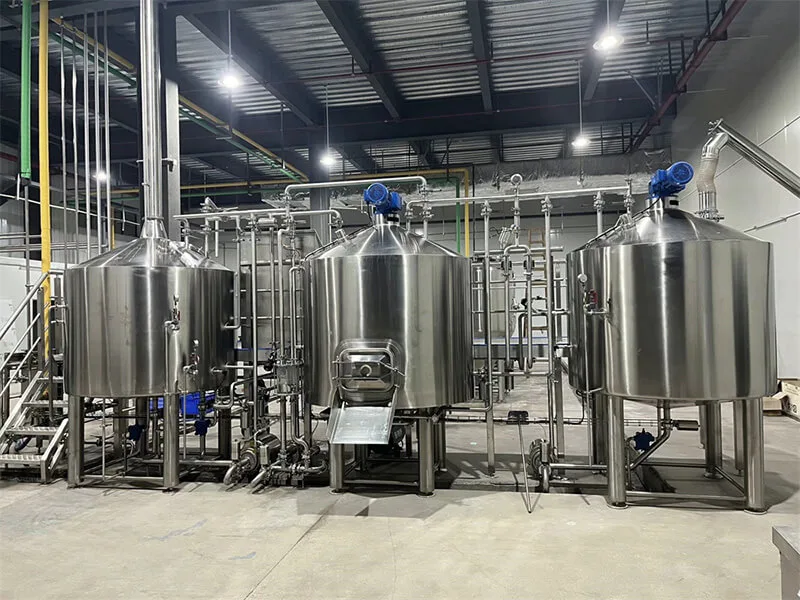
- 3-Vessel systems separate mashing and lautering
- 4-Vessel systems fully separate all brewhouse processes
Greater separation generally provides:
- Better temperature control
- More stable lautering
- Higher operational flexibility
But it also comes with increased investment and complexity.
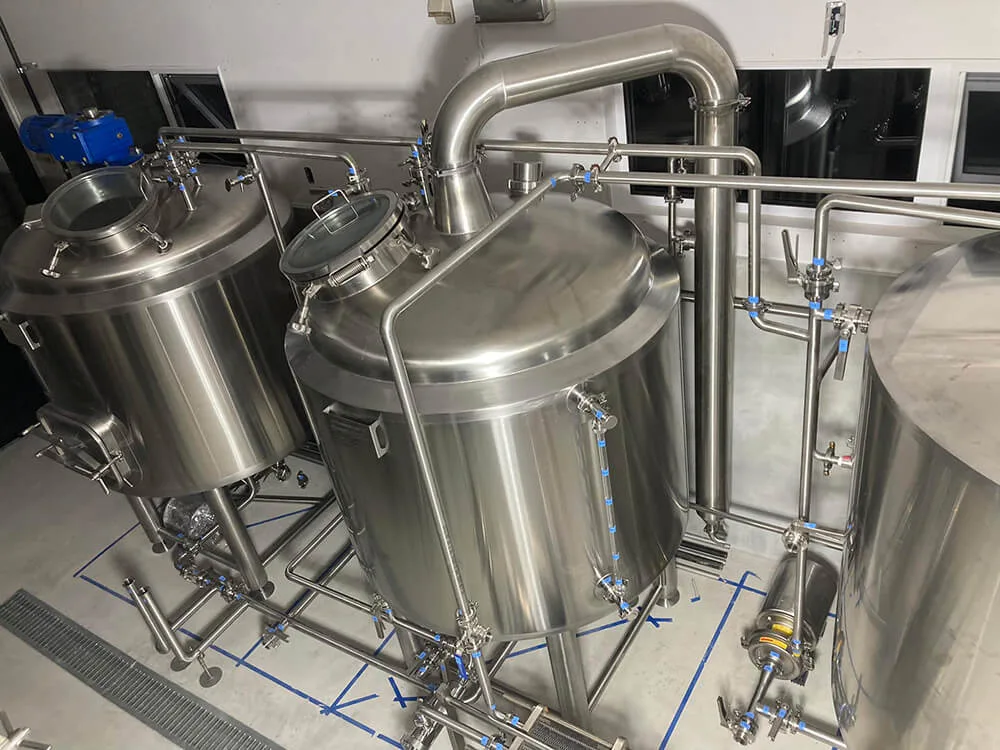
3. When a 2-Vessel Brewhouse System Makes Sense
A 2-vessel brewhouse typically includes:
- Mash/Lauter Tun
- Kettle/Whirlpool Tank
Best suited if:
- You operate a brewpub or small craft brewery
- Space is limited
- Batch volumes are moderate
- Single-infusion mashing covers most recipes
- Investment control is a priority
Technical considerations:
- Mash and lautering share the same vessel, requiring operational compromises
- Parallel brewing is limited
- Process efficiency depends heavily on operator experience
A 2-vessel system prioritizes simplicity and compact design over maximum throughput.
4. Why Many Breweries Choose a 3-Vessel Brewhouse System
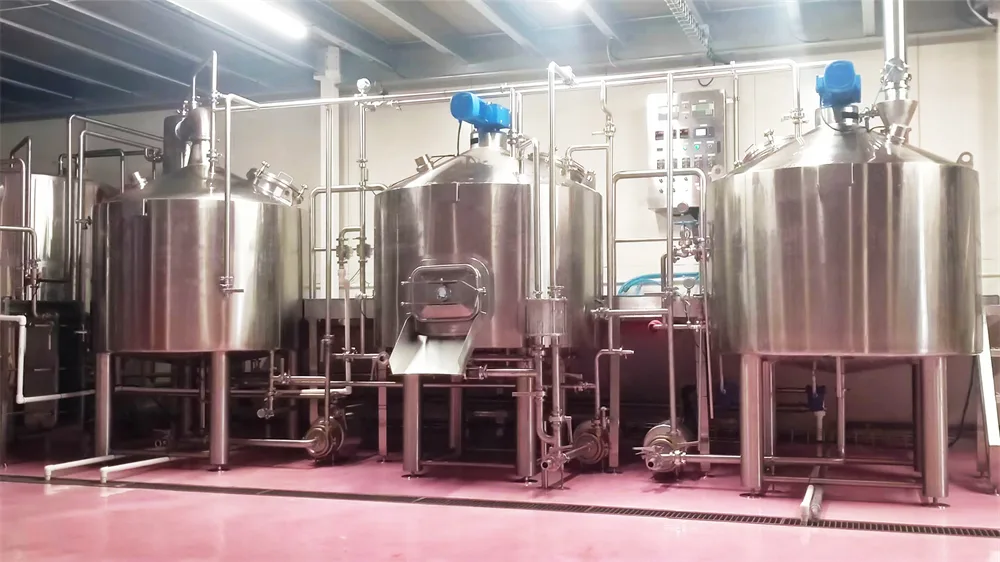
A 3-vessel brewhouse typically includes:
- Mash Tun
- Lauter Tun
- Kettle/Whirlpool Tank
This configuration is widely considered the technical balance point for professional brewing.
Best suited if:
- Consistent extract efficiency is required
- Step mashing or lager brewing is planned
- Production stability matters more than minimal investment
- Medium-term expansion is expected
Technical advantages:
- Dedicated mash tun improves temperature control
- Lauter tun design is optimized for filtration, reducing stuck mash risk
- More predictable brewing cycles and repeatable results
For many micro and craft breweries, the 3-vessel system offers the best compromise between control, cost, and scalability.
5. When a 4-Vessel Brewhouse System Is the Right Choice
A 4-vessel brewhouse separates all major processes:
- Mash Tun
- Lauter Tun
- Boiling Kettle
- Whirlpool Tank
Best suited if:
- Multiple brews per day are required
- High-volume or regional distribution is planned
- Automation and process optimization are priorities
- Long-term scalability is critical
Technical advantages:
- Parallel operations significantly increase throughput
- Each vessel is optimized for a single process
- Superior control of boiling intensity and trub separation
- Ideal for high-gravity and continuous production environments
A 4-vessel system is designed for maximum efficiency and long-term production planning, not minimal footprint.
6. Other Technical Factors That Influence System Choice
Beyond vessel count, consider:
- Heating method (steam, electric, direct fire)
- Automation level (manual, semi-auto, PLC)
- Available utilities (steam, power, water, glycol)
- Operator skill level
- Cleaning and CIP requirements
A well-chosen mash system should match both technical capability and operational reality.
7. There Is No “Best” Brewhouse System—Only the Right One
From an engineering perspective, no mash system is universally superior.
The optimal choice depends on how well the system supports:
- Your brewing process
- Your production volume
- Your growth strategy
A smaller system with the right configuration often outperforms a larger system with the wrong one.
結論
Choosing the right brewhouse system is a strategic technical decision that shapes daily brewing performance and long-term brewery success. By understanding the functional differences between 2-vessel, 3-vessel, and 4-vessel brewhouse systems, brewers can make informed choices that balance investment, efficiency, and scalability.
In professional brewing, the right system is the one that grows with your brewery—not against it.
👉 Get your custom turnkey solution from Meto—designed by brewers, for brewers.
Request Your Free Consultation & System Quote