How Commercial Breweries Can Shorten Total Production Time Without Sacrificing Quality
In today’s competitive craft-beer market, breweries are under pressure to increase production efficiency, reduce lead time, and respond faster to market demand—while still protecting the flavor, stability, and consistency that define their brand. Shortening the total brewing cycle is not simply a matter of rushing fermentation or cutting corners; it requires smart process optimization, advanced equipment design, and accurate control of critical variables.
So how can commercial breweries reduce production time without compromising beer quality? Here are key strategies widely adopted by modern professional brewers.
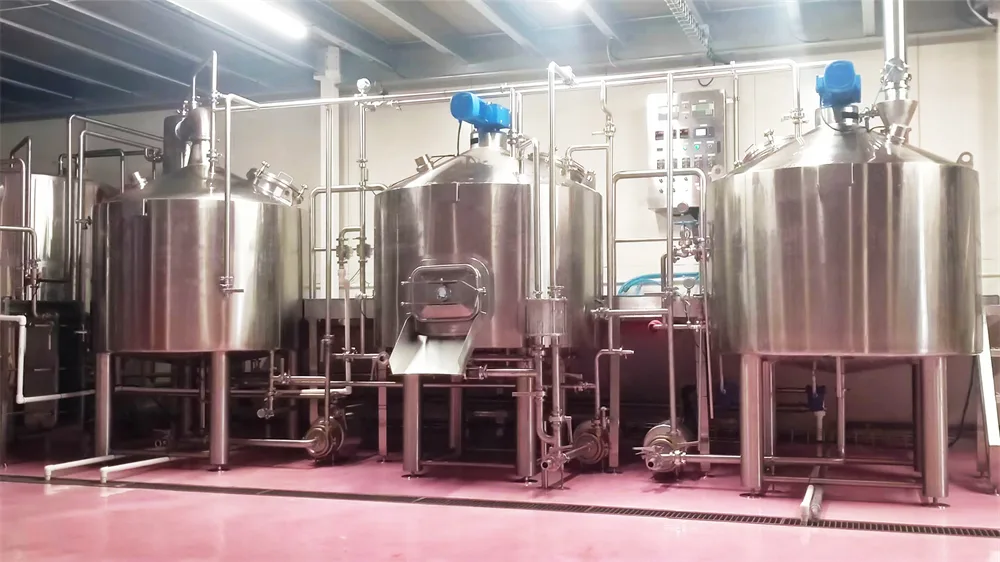
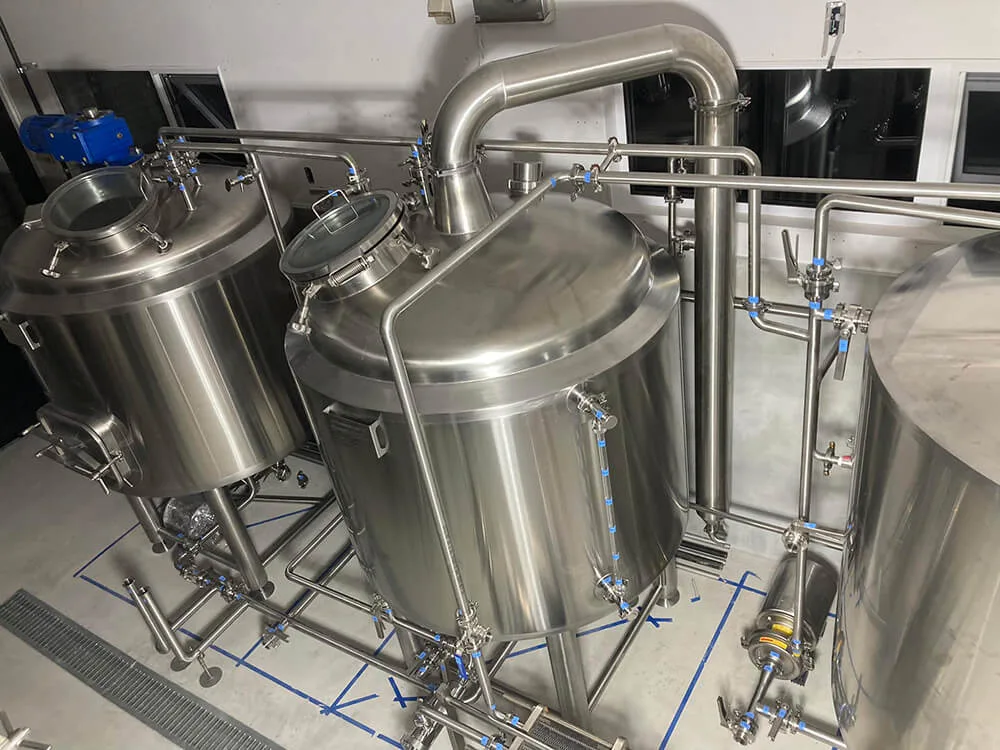
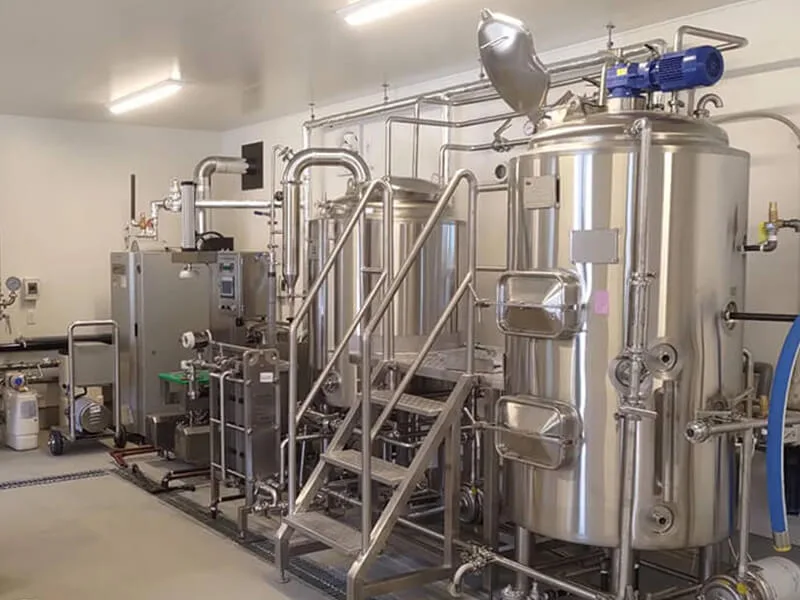
1. Design a Brewhouse System for Higher Brewhouse Efficiency
The foundation of cycle optimization begins in the brewhouse. Improving mash efficiency, lautering speed, and whirlpool performance directly affects how quickly wort can be produced for fermentation.
Effective methods include:
- Using rake-armed lauter tuns to shorten lautering time and improve runoff clarity
- Applying high-efficiency heat exchangers for faster wort cooling
- Implementing steam or direct-fire heating systems with precision temperature control
- Selecting 2–4 vessel brewhouse configurations that support parallel brewing (e.g., lautering while boiling)
A well-engineered brewhouse can reduce hot-side processing time from 8–10 hours to 5–6 hours per batch, enabling more batches per day without affecting wort quality.
2. Invest in Fermentation Efficiency and Temperature Control
Fermentation is the longest stage of beer production, typically lasting 7–21 days depending on style. Speeding up fermentation without harming flavor requires stable temperature control and proper yeast management, not simply increasing heat.
ベストプラクティス:
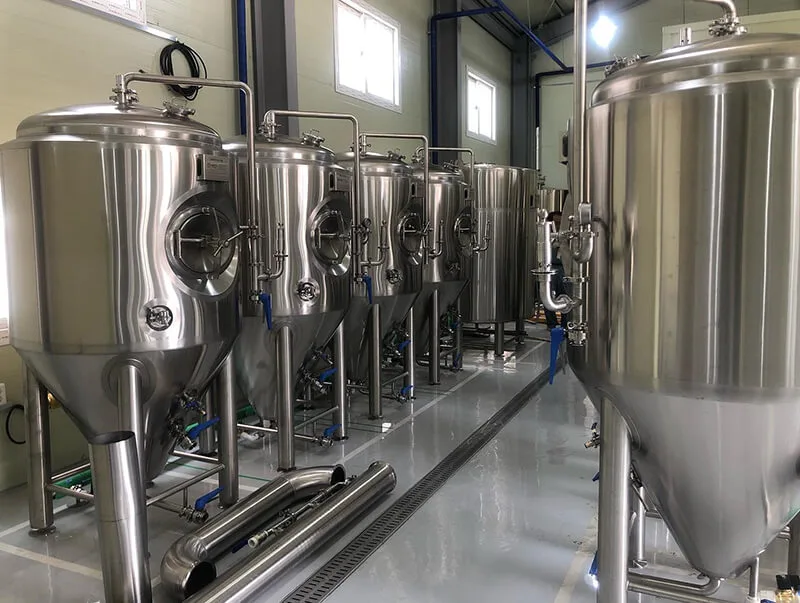
- Use cylindroconical unitanks that combine fermentation and conditioning
- Maintain precise temperature control and cooling power matched to tank size
- Apply oxygenation and yeast nutrition to support healthy fermentation
- Harvest and pitch yeast scientifically to maintain vitality
When fermentation conditions are optimized, many breweries report 10–20% shorter fermentation time while improving ester profile and attenuation consistency.
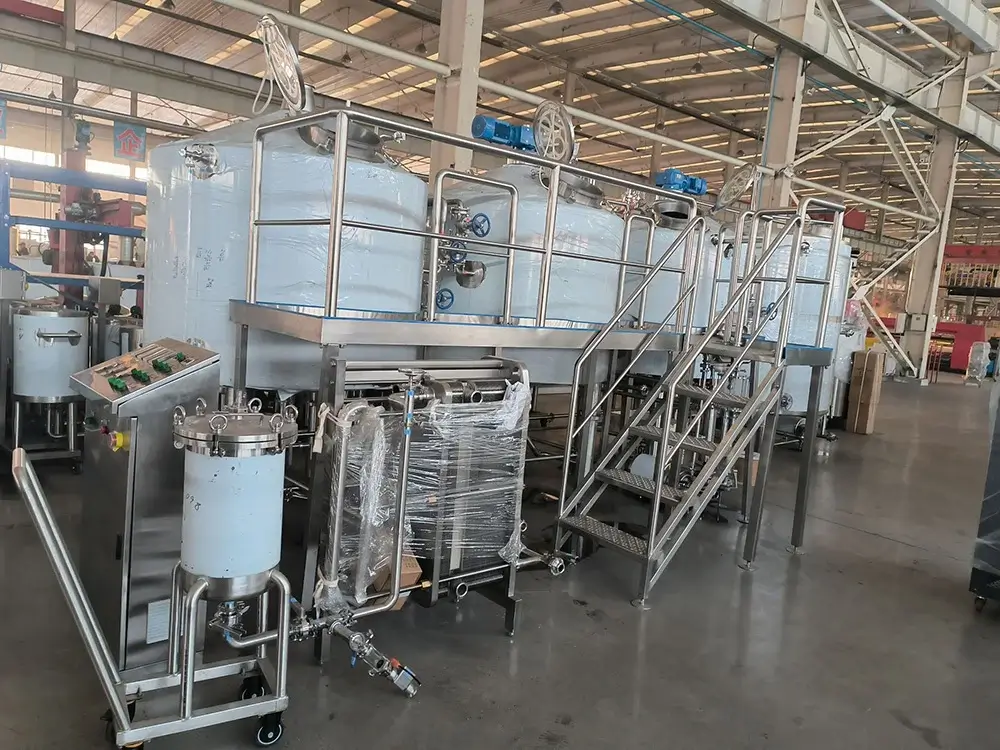
3. Use Modern CIP & Sanitation Systems to Reduce Downtime
Cleaning is essential—but traditional manual cleaning takes hours. Upgrading to automated CIP (Clean-in-Place) systems keeps hygiene high while reducing cycle time and labor effort.
Advantages of a dedicated CIP system:
- Faster tank turnaround between batches
- Higher chemical efficiency and reduced water/energy usage
- Safer, repeatable cleaning routines
A fully automated CIP can cut sanitation time by 30–50%, directly increasing production capacity.
4. Optimize Cold-Side Conditioning and Filtration
Post-fermentation processes such as cooling, chilling, dry hopping, filtration, and carbonation can also delay time to market.
Solutions include:
- Using glycol-powered cold liquor tanks and adequate cooling capacity
- Employing centrifuges or DE filters for faster clarification
- Applying inline carbonation units to eliminate multi-day conditioning
These upgrades can shorten cold-side time from several days to less than 24 hours, particularly for high-production breweries.
5. Digital Control and Data Automation
Breweries increasingly rely on digital process control to minimize human error, improve repeatability, and manage real-time adjustments.
Smart automation features:
- Automated temperature management
- Remote process monitoring
- Batch data tracking & recipe logging
- Alarm and safety interlocks
Automation ensures consistent beer quality while freeing brewers from constant monitoring—allowing them to focus on product development rather than repetitive tasks.
結論
Shortening the total brewing cycle without sacrificing quality is absolutely achievable—not by pushing the beer faster than it should go, but by optimizing process efficiency and adopting modern brewing technology.
醸造所の効率、発酵制御、CIP自動化、デジタルプロセス管理をアップグレードする醸造所は、生産量を大幅に増やし、運営コストを削減し、市場投入までの時間を短縮することができる。
Speed and quality are not mutually exclusive; with the right equipment and process design, they enhance each other.
醸造に関するご質問は、下記までお気軽にどうぞ。 お問い合わせ メト装備。