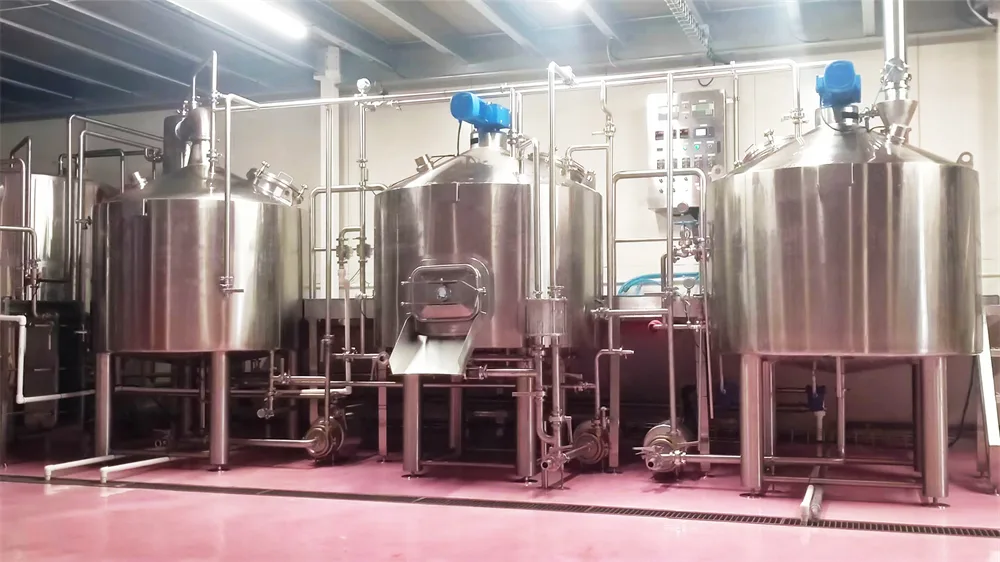
In craft brewing, recipes are only part of the story.
Using the same ingredients and the same yeast, different fermentation tanks can create very different flavors, aromas, and mouthfeel.
For professional brewers who focus on product differentiation, a fermentation tank is not just a container.
It is a process tool that directly shapes beer character.
Conical tanks, horizontal tanks, unitanks, and even open fermenters all serve different brewing goals.
This article explains how each type of fermentation tank influences process and beer style, not just equipment specs.
1. Conical Fermentation Tanks: The Modern All-Rounder
Why are conical tanks so common?
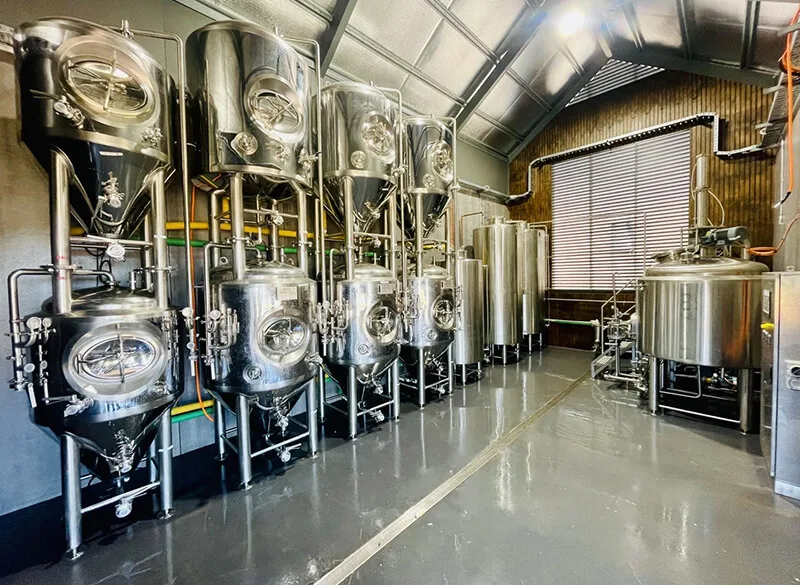
Conical fermentation tanks are the standard choice in most commercial breweries today.
They offer the best balance between efficiency, control, and consistency.
Suitable for both ales and lagers
- Widely used for most ales and lagers
- Cone bottom allows yeast to settle naturally
- Jacketed cooling enables precise temperature control
- Helps reduce off-flavors and batch variation
Advantages for dry hopping
For hop-forward beers such as IPA and APA:
- Easy dry hopping from side port or top manway
- Better contact between hops and beer
- Can be combined with CO₂ purging to reduce oxygen pickup
Easy yeast harvesting
- Yeast collects at the cone bottom
- Brewers can remove yeast in stages
- Makes yeast reuse easier and more consistent
- Helps reduce yeast costs
最高だ:
Breweries that want stable quality, high efficiency, and a wide product range
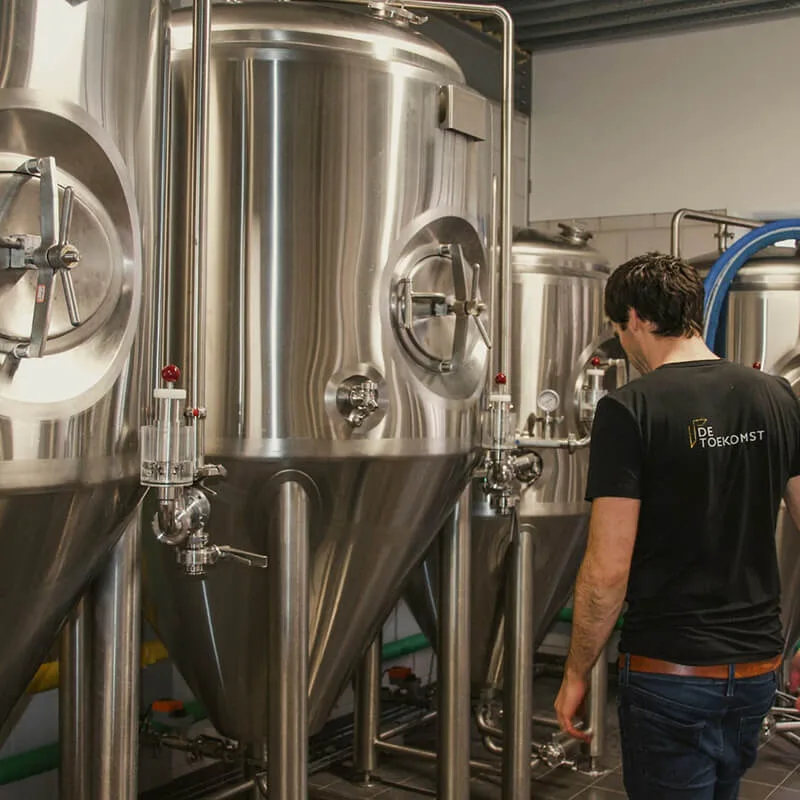
2. Horizontal Fermentation Tanks: Tradition and Flavor Control
Even with modern brewing technology, horizontal tanks are still used for one key reason:
they create a different flavor profile.
Why horizontal tanks are used for lagers
- Shallower beer depth means lower pressure
- Yeast works more gently
- Ester and sulfur production is more restrained
This is why many German and Czech lager breweries still prefer horizontal fermentation.
Impact on wheat beers
For some wheat beer styles:
- Lower pressure helps yeast express classic flavors
- Banana and clove notes can be more pronounced
- Closer to traditional fermentation conditions
Trade-offs to consider
- Requires more floor space
- Cleaning and automation are more complex
- Not ideal for fast expansion
最高だ:
Breweries focused on traditional lagers or specific classic styles
3. Unitanks: One Tank, Multiple Processes
The key idea of a unitank is simple:
fermentation, carbonation, and cold storage in one vessel.
Real process advantages
- Fewer beer transfers → less oxygen risk
- Shorter production time
- Higher tank utilization
- Reduced piping and manual handling
Ideal for modern beer styles
Hazy IPA / NEIPA
- Extremely sensitive to oxygen
- Unitanks allow closed cooling and carbonation
- Helps preserve fresh hop aroma
Fresh beer and taproom-focused production
- Faster turnaround from fermentation to serving
- Less product loss during transfers
Why unitanks matter for small breweries
- More processes with fewer tanks
- Better use of limited space
- Lower initial investment pressure
最高だ:
Breweries producing IPA, hazy styles, and fast-rotating beers
4. Open Fermentation Tanks: Irreplaceable for Certain Styles
Open fermentation may seem outdated, but for some beer styles, it is still essential.
Why Belgian and wild beers rely on open fermentation
- Direct contact between yeast and air
- Complex microbial interaction
- Unique ester, phenol, and wild character
These flavor results are very difficult to achieve in closed tanks.
Important realities
- Very high hygiene requirements
- Greater risk of batch variation
- Strongly depends on brewer experience, not automation
最高だ:
Breweries specializing in Belgian styles, sour beers, or wild fermentation
5. Choosing a Fermentation Tank Means Choosing a Flavor Direction
When selecting fermentation tanks, the real questions are:
- Do you want maximum consistency or expressive variation?
- Is your priority efficiency and scale, or tradition and character?
- Is your brewery competing on volume, or on unique beer styles?
Fermentation tanks do not make beer for you,
but they amplify every decision you make about flavor.
Final Thoughts: Let Equipment Serve Your Flavor Vision
Advanced breweries do not simply buy the most expensive tanks.
They choose equipment that matches their beer styles and process philosophy.
When you treat fermentation tanks as tools for flavor creation, not just stainless steel assets, real differentiation begins.
If you want to select or design a fermentation system based on beer style, capacity planning, and brewing process, our engineers and brewing consultants can help you build equipment that truly supports your flavor goals.