A Practical Guide for Breweries, Pub Breweries, and Microbreweries
Brewhouse efficiency is one of the most important performance indicators in beer brewing.
For most breweries, pub breweries, and microbreweries, brewhouse efficiency usually ranges from 74% to 79%.
Stable and high brewhouse efficiency means:
- Better use of raw materials
- More consistent wort quality
- Lower brewing cost per batch
- Higher return on brewery equipment investment
In this article, we explain the main factors that affect brewhouse efficiency, based on practical brewing experience.
1. Raw Materials
Malt Quality
Different malts have different laboratory extract values, which directly affect brewhouse efficiency.
- High extract malt → higher brewhouse efficiency
- Well-modified malt → better enzyme activity
- Poorly modified malt → lower sugar conversion
For microbrewery equipment and pub brewery systems, stable malt quality is especially important.
Malt Moisture Content
Brewhouse recipes are usually calculated based on air-dry malt weight.
- Higher malt moisture
- Less usable dry extract
- Lower brewhouse efficiency
Good malt storage and moisture control help improve efficiency.
Brewing Water
Water chemistry affects mash pH and enzyme activity.
- High carbonate hardness → higher pH → lower enzyme efficiency
- Sulfate-rich or soft water → lower pH → better enzyme performance
A proper water treatment system is an important part of a modern brewhouse system.
2. Brewhouse Equipment
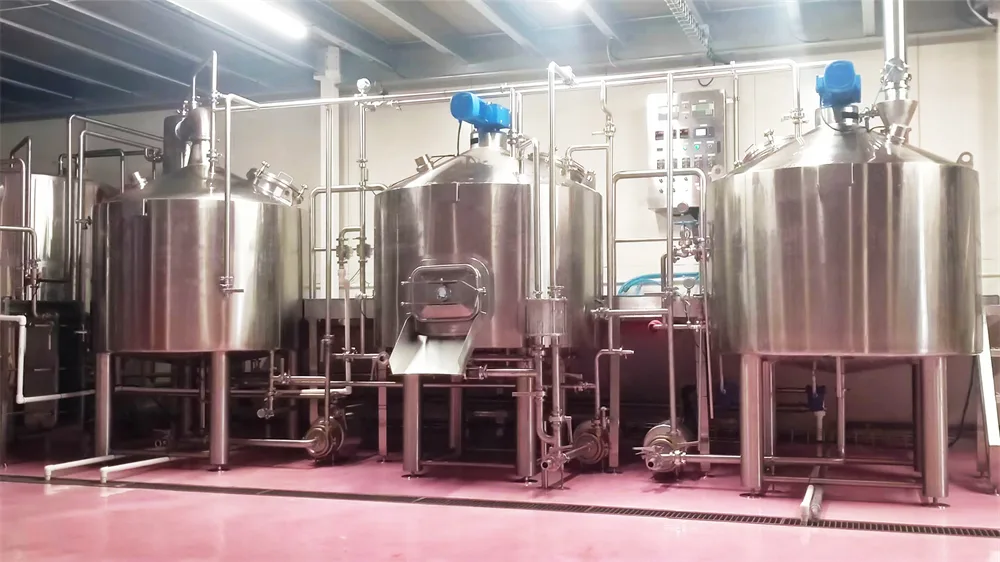
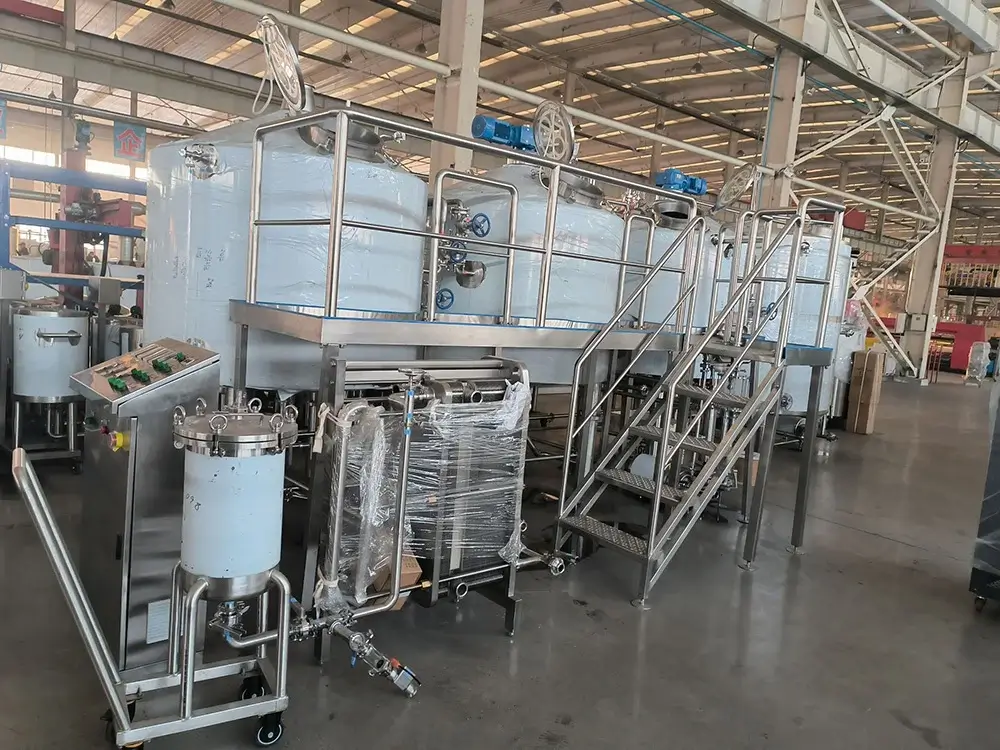
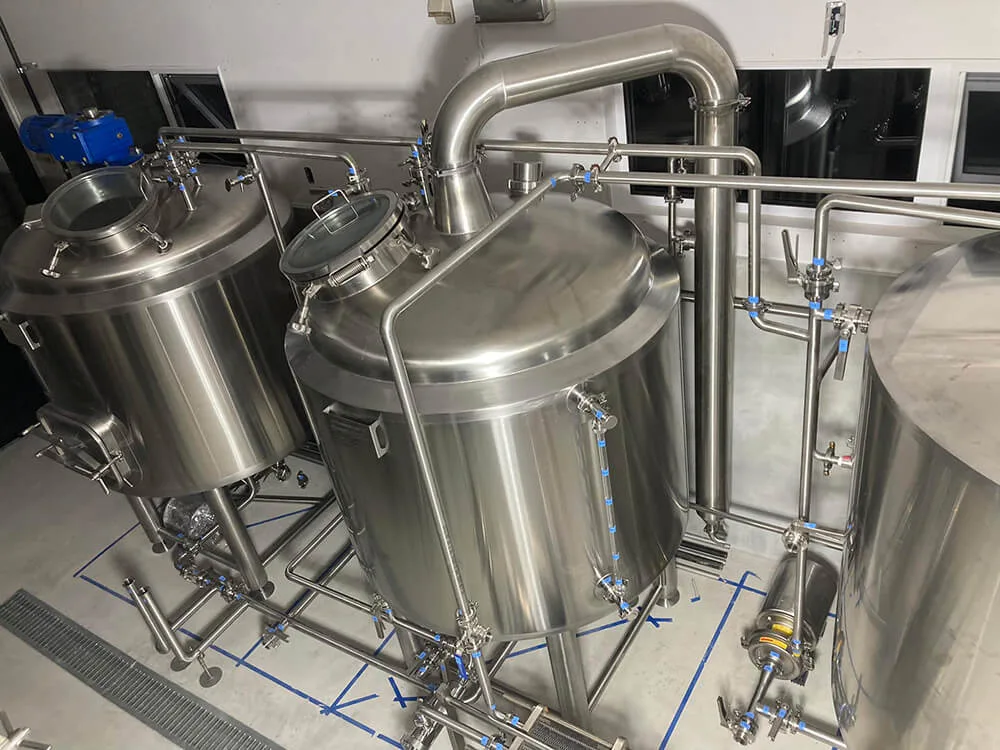
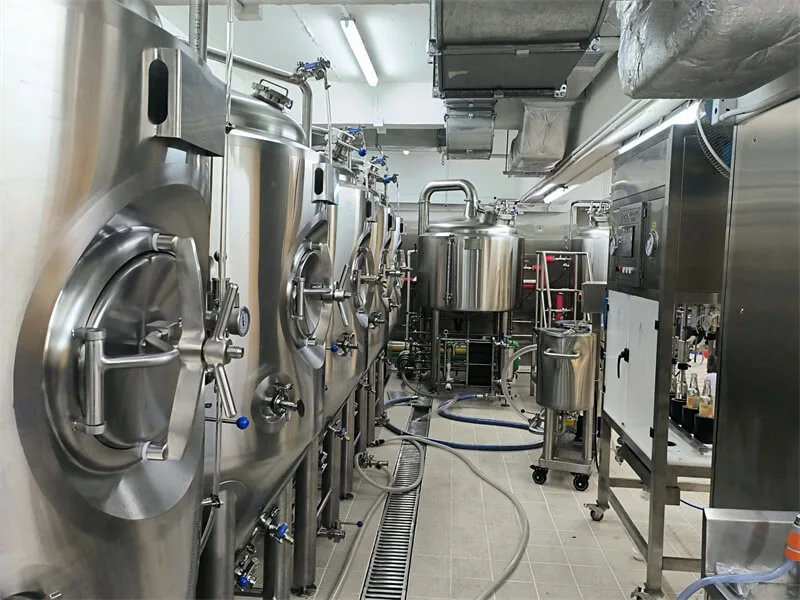
Modern brewery equipment should produce high-quality wort while achieving good brewhouse efficiency.
Efficient brewhouse systems usually include:
- Even mash mixing
- Well-designed lauter tun
- High open-area false bottom
- Controlled and uniform sparging
Older or traditional brewhouse systems often show:
- Poor sparging performance
- Uneven wort flow
- High residual sugar in spent grain
How to Evaluate Equipment Efficiency
A common method is to compare:
Laboratory extract − Actual brewhouse efficiency
- Small difference → good brewhouse design
- Large difference → equipment or process needs improvement
3. Mashing Process
Mashing Time and Intensity
Within a reasonable range:
- Longer mash time
- Stronger enzymatic activity
- Higher brewhouse efficiency
For example, separating thick mash and boiling it strongly can help extract more fermentable sugars.
Process Optimization
Some techniques can further improve efficiency:
- Pre-mashing
- Pressurized mash boiling
These methods are used in certain brewery equipment configurations.
Water Ratio
The ratio between mash water and sparge water is critical.
- High-gravity mashing
- Makes sparging more difficult
- Can reduce brewhouse efficiency
Good brewhouse system design considers water balance from the beginning.
4. Lautering and Sparging
Lautering is one of the key steps affecting brewhouse efficiency.
Common problems include:
- Mash-in too fast → uneven mash bed
- Uneven sparging → poor sugar extraction
- Unbalanced outlet flow → reduced efficiency
Sparging Method
In practice:
- Multiple small sparge steps
- Often achieve higher efficiency
- Compared to continuous sparging
How to Check Lautering Performance
Lauter performance can be evaluated by:
- Measuring extract remaining in spent grain
- Lower residual extract → better lautering
5. Operation and Automation
Brewhouse efficiency depends heavily on enzyme reactions, which are sensitive to time and temperature.
If operators fail to control:
- Temperature accurately
- Mashing time precisely
Brewhouse efficiency will drop, and raw materials may be wasted.
Importance of Automation
Modern microbrewery equipment and pub brewery brewhouse systems often use:
- Pre-programmed mashing steps
- 自動温度制御
- Accurate time management
This reduces human error and ensures stable brewing results.
Equipment Solution Insight (Soft Marketing)
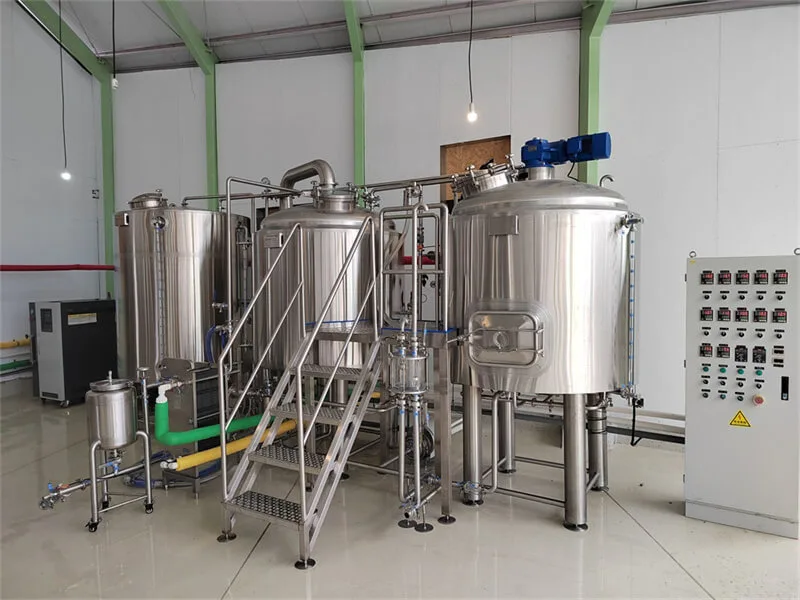
A well-designed brewhouse system combines proper vessel geometry, efficient lautering design, and precise automation.
When brewery equipment is matched correctly with brewing capacity and production goals, brewhouse efficiency becomes easier to achieve—and easier to maintain.
Choosing the right brewery equipment at the planning stage can save long-term operating costs and improve overall brewing performance.
結論
Brewhouse efficiency is not determined by a single factor. It is the result of:
Raw materials + brewhouse equipment + brewing process + operation control
With a reliable brewery equipment supplier and a properly designed brewhouse system, breweries can achieve stable efficiency while maintaining beer quality.
If you are planning a pub brewery or microbrewery, brewhouse efficiency should be considered from the very beginning of system design.
If you would like to learn more about brewing processes, brewhouse design, or equipment selection, feel free to お問い合わせ for professional advice.