In today’s competitive hospitality market, bars are no longer just places to drink—they are places to experience. One of the most powerful ways to stand out is by brewing beer on-site. From brewpubs and taprooms to restaurants and cocktail bars, on-site brewing has become a proven strategy to increase margins, strengthen brand identity, and attract loyal customers.
This article provides a practical guide to bar brewing equipment, helping bar owners and founders understand what equipment is needed, how to choose the right system, and how to build a successful small-scale brewing operation.
Why Bars Are Investing in Brewing Equipment
Adding brewing equipment to a bar is not just about making beer—it’s about creating value.
Key benefits include:
- Higher profit margins compared to reselling commercial beer
- Unique house beers that differentiate your bar from competitors
- Freshness and quality control
- Stronger brand storytelling and customer engagement
- Opportunities for events, tastings, and memberships
For many bars, brewing on-site transforms the business from a simple bar into a destination brewpub.
Typical Brewing Capacity for Bars
Bar brewing systems are usually compact, efficient, and designed for limited space.
Common capacities include:
- 300L – 500L systems: Ideal for small bars and restaurants
- 500L – 1000L systems: Suitable for busy brewpubs and taprooms
- 1000L+ systems: For bars with high volume or limited distribution plans
Most bars brew 1–3 batches per week, which is enough to keep multiple taps fresh without overproduction.
Core Bar Brewing Equipment Explained
1.ミリングシステム
The brewing process starts with grain preparation.
For bar use:
- Compact roller mills (100–200 kg/h)
- Low noise and dust control design
- Manual or semi-automatic operation
A small milling system is sufficient and easy to operate without a full production team.
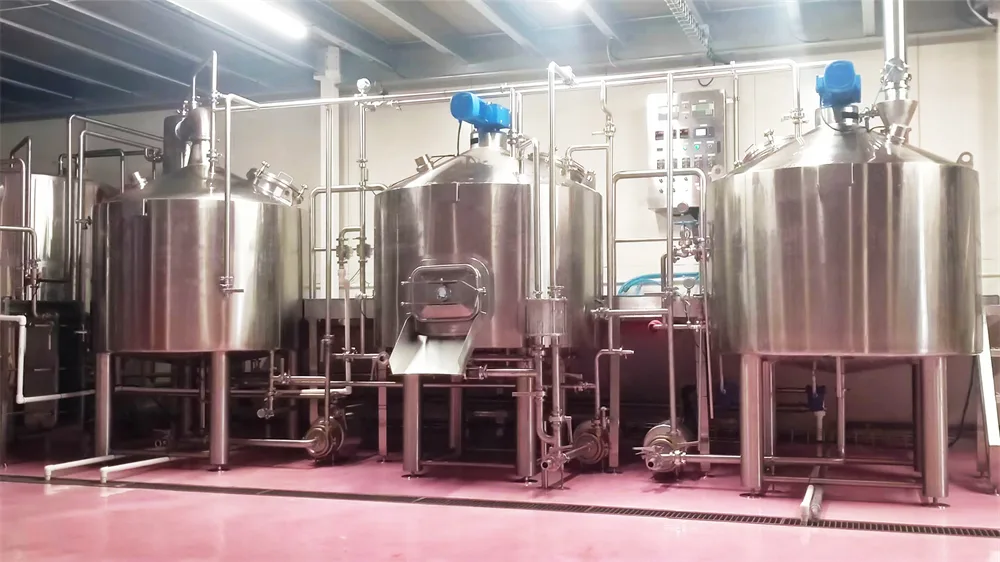
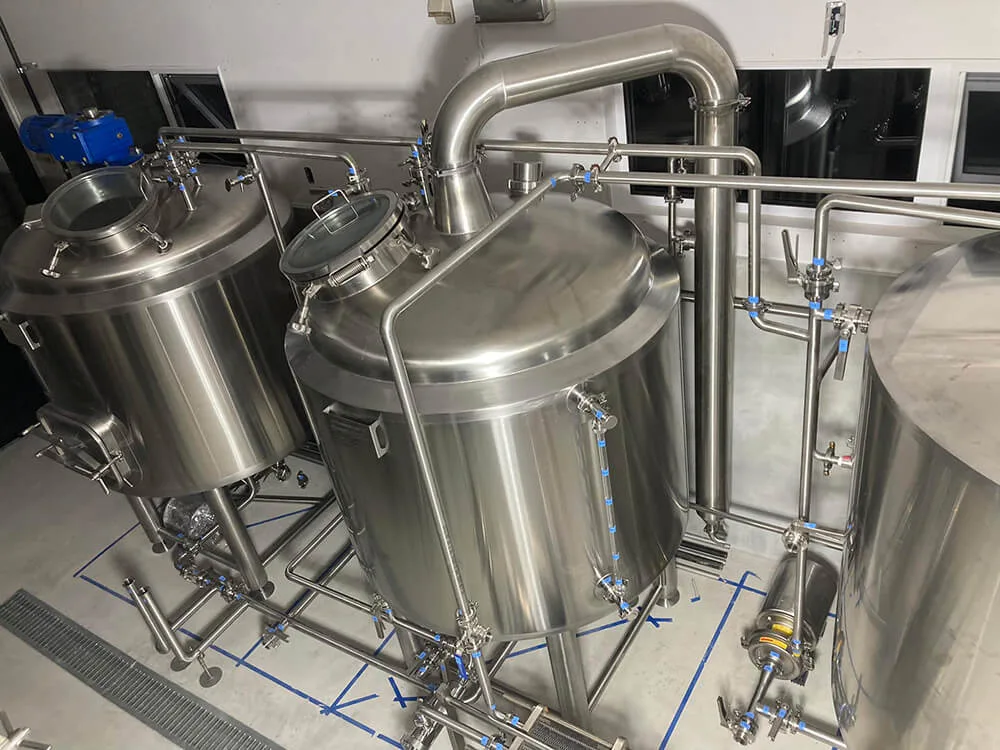
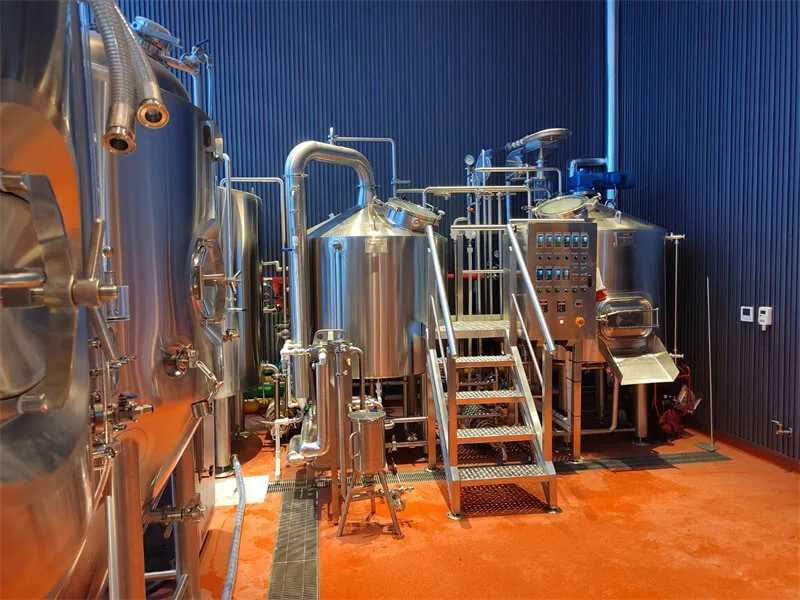
2. Brewhouse System (Heart of the Bar Brewery)
The brewhouse is the most visible and important part of bar brewing equipment.
Popular configurations for bars:
- Two-vessel system
Mash/Lauter Tun + Kettle/Whirlpool
(Most common for space efficiency) - Three-vessel system
Mash Tun + Lauter Tun + Kettle/Whirlpool
(Higher efficiency, more flexibility)
Heating options:
- Electric heating (clean, easy installation)
- Steam heating (higher efficiency, professional setup)
For bars, stainless steel tanks with polished finishes and optional LED lighting are often chosen, as the brewhouse is part of the customer-facing design.

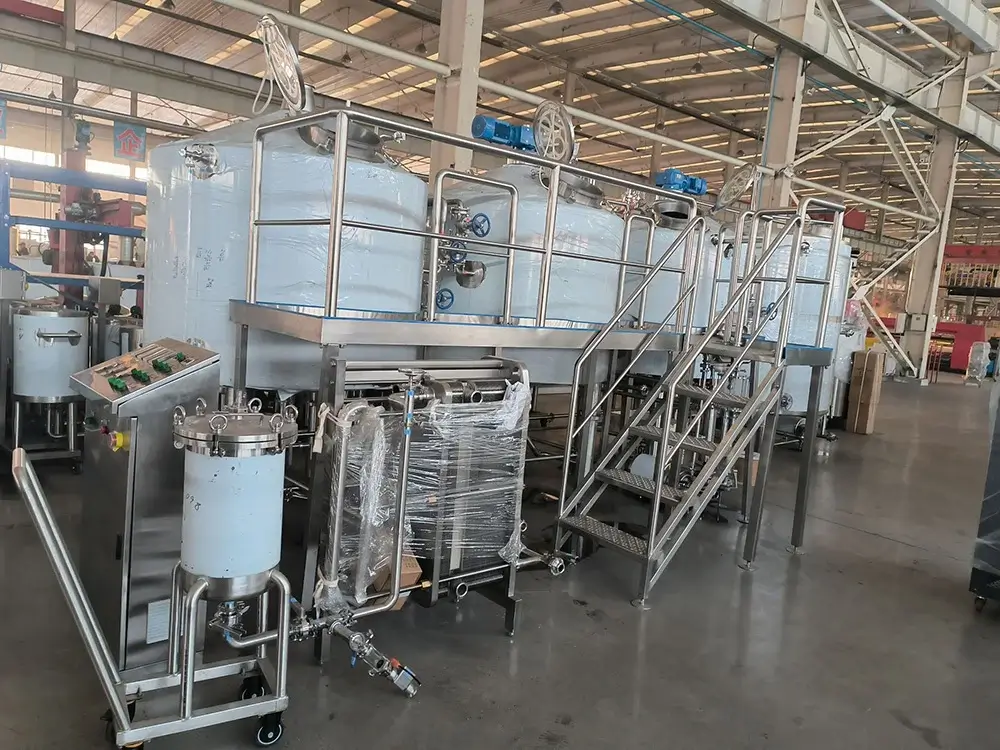
3. Fermentation Tanks (Unitanks)
Fermentation tanks determine beer quality and consistency.
Typical setup for bars:
- 2–6 unitanks
- Single-wall or jacketed (temperature-controlled)
- Sizes matching brewhouse capacity
Jacketed fermenters are strongly recommended, even for small bars, as they:
- Ensure stable fermentation temperatures
- Improve beer consistency
- Reduce risk for new brewers
4. Cooling System (Chiller)
Temperature control is essential for fermentation.
A bar brewing system usually includes:
- Compact glycol chiller (3–10 HP)
- 断熱グリコール配管
- Individual tank temperature control
This system operates quietly and fits well in back-of-house areas.
5. CIP Cleaning System
Clean-in-place (CIP) systems ensure hygiene and beer safety.
For bar breweries:
- Mobile CIP pump
- Small hot water tank
- Manual or semi-automatic cleaning cycles
Even small systems benefit greatly from CIP, reducing labor and contamination risks.
6. Control System
Modern bar brewing equipment is designed for simplicity.
Typical features include:
- PID digital temperature control
- Manual valve operation
- Optional PLC touchscreen upgrades
This allows bar staff or part-time brewers to operate the system reliably with minimal training.
Space Planning for Bar Brewing Equipment
One of the biggest concerns for bar owners is space.
Key planning tips:
- Combine brewing and display areas
- Use vertical tank designs
- Place fermenters in back-of-house if needed
- Ensure proper drainage, ventilation, and electrical load
A professional supplier can help design a compact, code-compliant layout tailored to your bar’s footprint.
Compliance and Safety Considerations
Bar brewing equipment must meet local safety and regulatory standards.
Important considerations:
- Electrical standards (CE, UL, or local codes)
- Pressure vessel compliance
- Food-grade stainless steel (304/316)
- Proper ventilation and steam exhaust
Early planning avoids costly modifications later.
Operating a Bar Brewery: Skill Level & Staffing
Many bar owners worry about brewing expertise.
Good news:
Modern bar brewing systems are designed for ease of use.
Options include:
- Hiring a part-time brewer
- Training existing staff
- Using standardized recipes and automation
With proper equipment and support, brewing can be integrated smoothly into daily bar operations.
Return on Investment (ROI)
While brewing equipment requires upfront investment, the payback period is often attractive.
Typical ROI drivers:
- Lower cost per liter compared to purchased beer
- Premium pricing for house beers
- Increased foot traffic
- Strong customer retention
Many bars recover equipment investment within 18–36 months, depending on volume and pricing.
Choosing the Right Brewing Equipment Supplier
Not all equipment suppliers understand bar operations.
Look for a partner who offers:
- Experience with bar and brewpub projects
- Turnkey solutions (design, equipment, installation)
- Customization for space and style
- Long-term technical support
The right supplier is not just selling tanks—they are helping you build a sustainable business.
最終的な感想
Bar brewing equipment opens the door to creativity, differentiation, and higher profitability. Whether you are launching a new brewpub or upgrading an existing bar, a well-designed brewing system can become the centerpiece of your brand and customer experience.
With the right planning, equipment, and support, brewing beer on-site is no longer just for large breweries—it’s a smart, achievable strategy for modern bars.