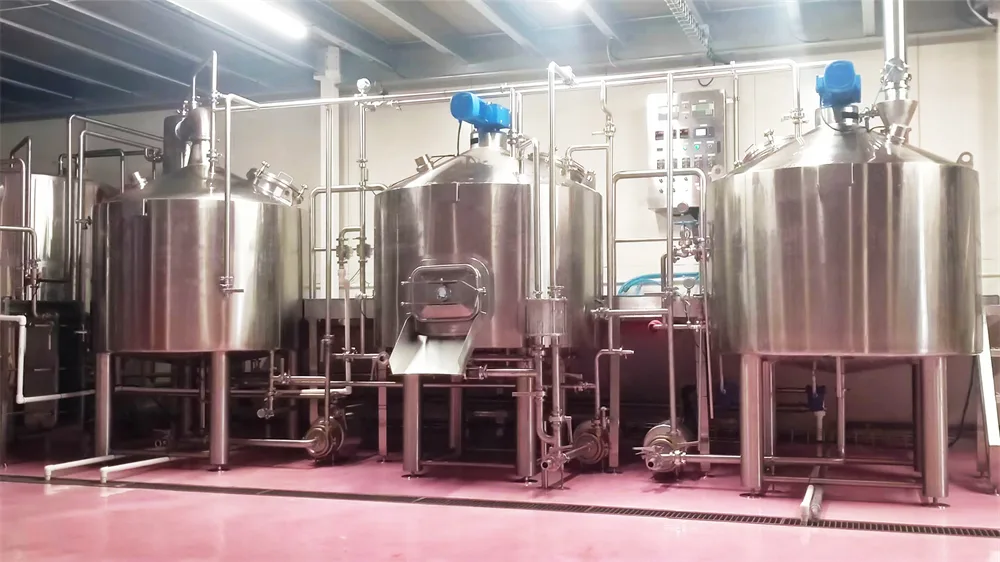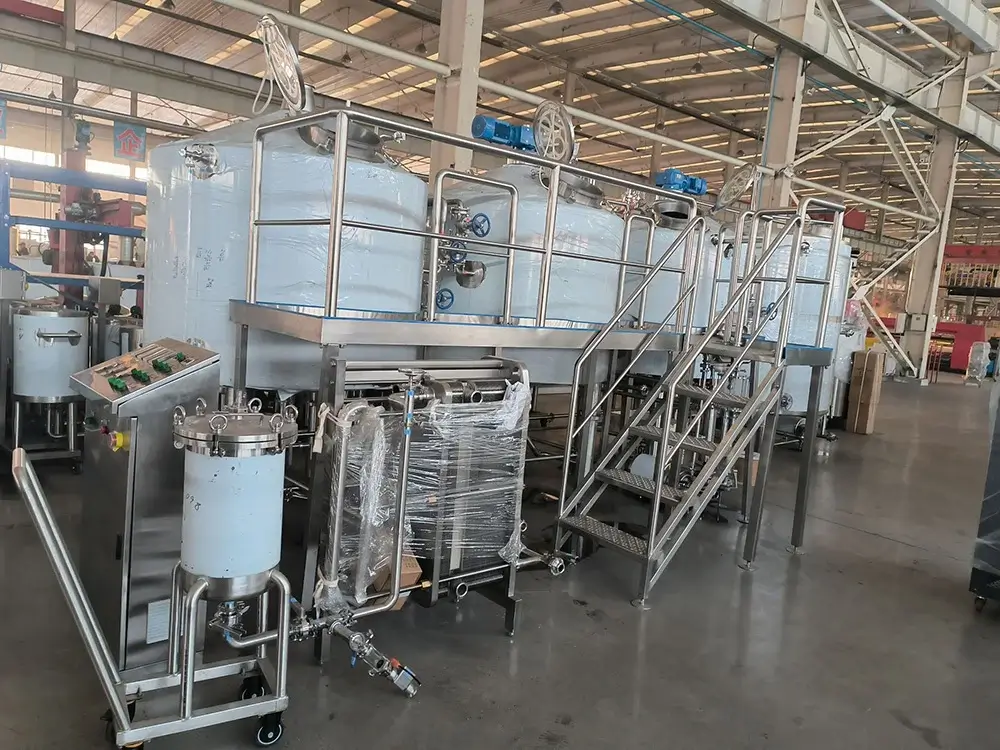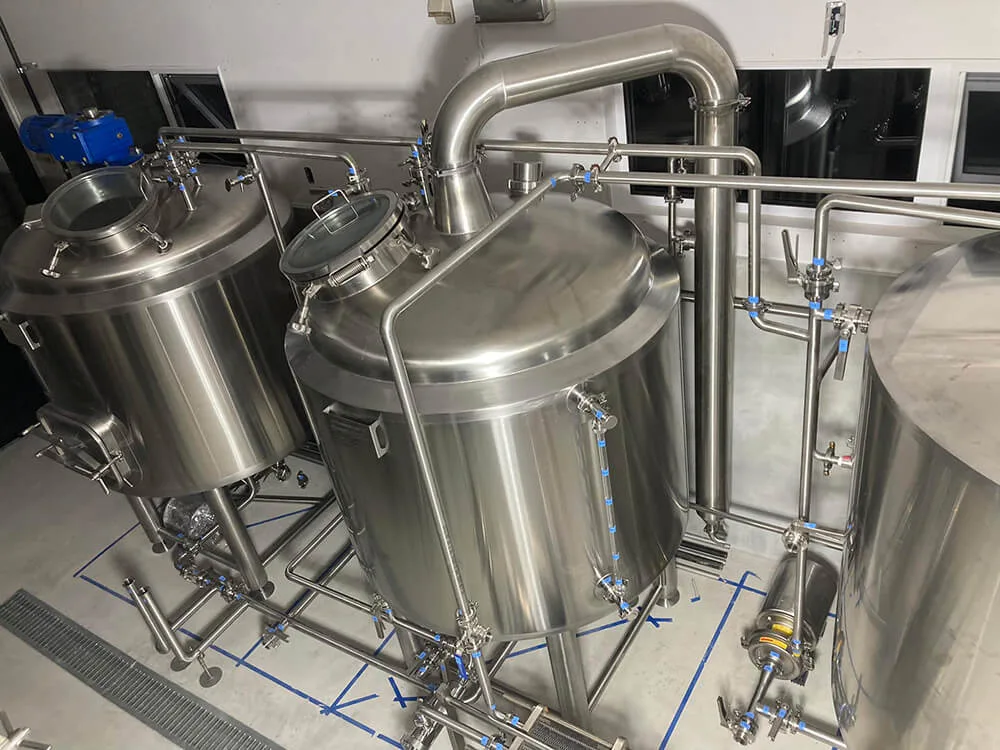
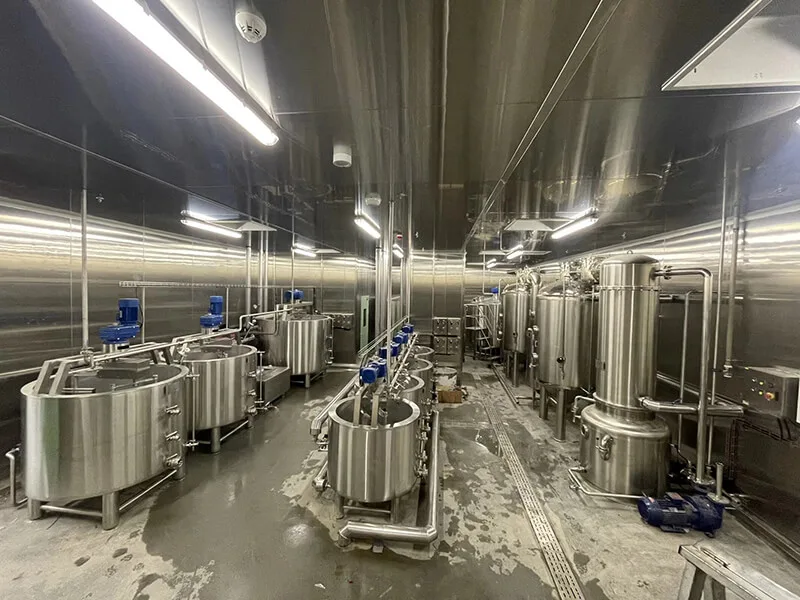
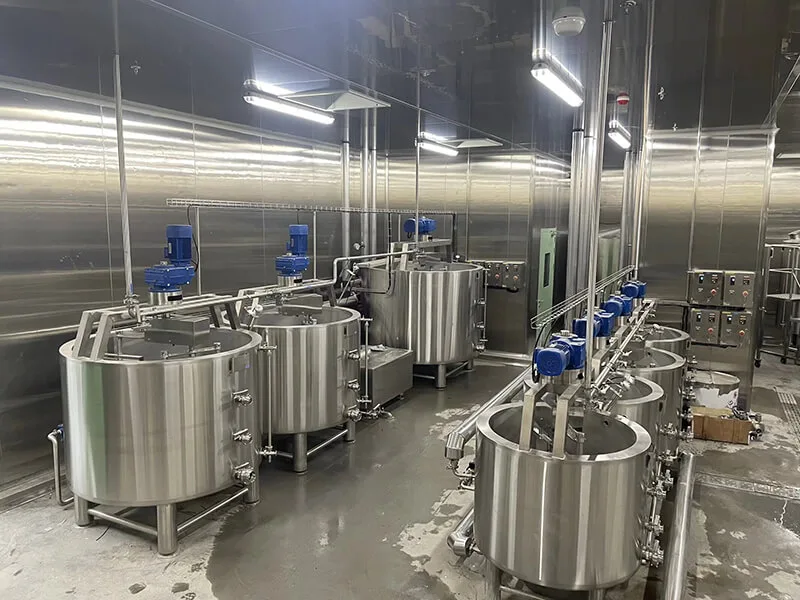
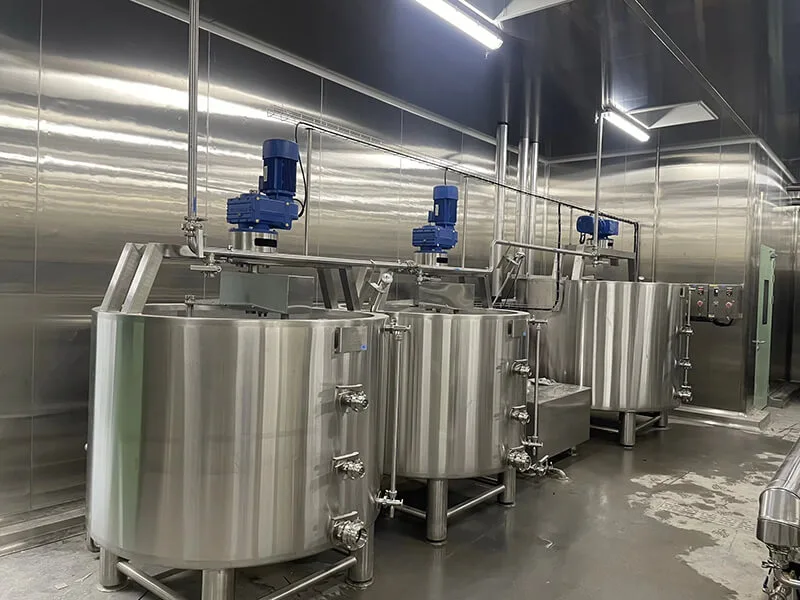
Meto’s cheese production system is engineered to deliver efficiency, precision, and flexibility for modern dairy processing. The full equipment setup includes milk tanks, cheese vats, and whey fermentation tanks—together forming a complete and highly automated cheese processing line. Recently, a domestic dairy enterprise purchased and commissioned this full cheese production system, marking another successful application of Meto’s dairy solutions.
1. Milk Tank — Stable Cooling and Uniform Storage
The milk tank is designed for receiving pasteurized milk and storing it at low temperatures.
Cooling time and cooling rate can be freely adjusted based on the production process.
The built-in agitator ensures uniform cooling throughout the tank, maintaining milk freshness and stability. This consistent temperature control lays the foundation for high-quality cheese production.
2. Cheese Vat — The Core of Curdling, Heating, Cooling & Fermentation
As the central component of the cheese-making process, the cheese vat performs curdling, temperature adjustment, mixing, cutting, and whey separation.
Once pasteurized milk enters the vat:
- Heating or cooling can be applied as required
- The stirring mechanism ensures gentle but effective mixing
- The cutting knives and scraping plates help form uniform curds
- Whey separation becomes faster and more consistent
These combined functions ensure that texture, moisture content, and yield remain highly stable—meeting the requirements of both artisanal and industrial cheese production.
3. Whey Fermentation Tank — Flavor Development & Resource Optimization
The whey separated from the cheese vat flows into the whey fermentation tank.
This tank provides automated agitation and cooling, making it ideal for:
- Flavor adjustment
- Continued fermentation
- Value-added whey beverage production
A portion of the whey can be concentrated under low pressure and returned to the cheese vat. Through the Maillard reaction, additional cheese flavor layers can be developed.
This approach improves resource utilization and supports diversified product lines.
4. Fully Integrated System With Precision Temperature Control
Across all equipment, temperature control, agitation speed, and automated functions are seamlessly integrated.
Producers benefit from:
- High process accuracy
- Stable product quality
- Strong batch-to-batch consistency
- Flexibility to adapt to different cheese types
- Reduced labor intensity and production variability
This system is ideal for dairy enterprises seeking high-quality, high-efficiency cheese manufacturing solutions.
About Cheese Vats?
As global interest in cheese production increases, many overseas customers search for technical answers related to cheese vats, their design, and operational features. Below are the most commonly asked questions—along with expanded technical insights relevant to dairy producers.
1. What Types of Cheese Vats Are Available?
International buyers typically compare:
- Open cheese vats — Easier to operate and suitable for small batches or artisanal cheese
- Closed cheese vats — Better hygiene control, CIP capability, reduced contamination risk
- Double-O vats — Common in large-scale cheddar/mozzarella production
- Vertical or horizontal vats — Chosen based on space, automation level, and product type
Meto’s vats can be customized according to batch size, automation needs, and cheese varieties.
2. What Materials Are Used and Why?
High-quality cheese vats are typically built from:
- SUS304 stainless steel — Standard for food-grade applications
- SUS316L stainless steel — Used when higher corrosion resistance is required
Interior surfaces are polished to ≤ 0.6 µm to eliminate dead corners and ensure smooth cleaning during CIP.
3. How Does Temperature Control Work?
Accurate heating and cooling is one of the most critical features for any cheese vat.
Meto’s cheese vats support:
- Jacketed heating
- Cooling via cold water or glycol
- PID temperature control
- Multi-stage temperature programming
This ensures fermentation curves and curd development remain consistent across every batch.
4. What About the Cutting and Stirring System?
International customers pay close attention to:
- Cutting knives — Adjustable spacing for different cheese textures
- Scraper blades — Prevent curd sticking and improve whey drainage
- Variable-speed stirring — Ensures gentle mixing without damaging curds
These mechanical systems directly affect cheese yield and uniformity.
5. Is Automation Important?
Automation is one of the top considerations for overseas buyers.
Key automated features include:
- 温度制御
- Agitation control
- Cutting programs
- Timed whey discharge
- Data logging and batch traceability
Automation reduces labor demand and ensures repeatable quality across each production cycle.
6. How Is CIP Cleaning Performed?
Hygiene is a major concern for global dairy processors.
Modern cheese vats support:
- CIP spray balls
- Automated cleaning cycles
- Alkaline/acid washing
- Full-system sanitization
A properly designed CIP system reduces downtime and improves food safety compliance.
結論
ミルクタンク、チーズタンク、乳清発酵タンクからなる酪農企業に納入されたチーズ加工システムは、メト社が完全で効率的かつ柔軟な酪農生産ソリューションを提供できることを実証している。
高度な加熱・冷却制御、自動ミキシング、正確なカードカット、インテリジェントなホエー発酵を統合したこのシステムは、効率性、製品の一貫性、多様な生産に対する業界の最新の要求に応えている。
チーズ製造に対する世界的な関心が高まり続ける中、新しいチーズ市場への進出を目指す酪農家にとって、チーズ製造用バットの構造、性能、自動化機能を理解することは不可欠となっている。
醸造に関するご質問は、下記までお気軽にどうぞ。 お問い合わせ メト装備。